The layered structure of global trade
How do commodity and industry layers organise international trade, and how do production shocks travel through it?
International trade connects countries through different commodities and industries. Keeping those relations separate reveals structures that an aggregate trade network can obscure, from commodity-specific communities to interactions within and across production sectors.
Our studies examine the multilayer organisation of global value chains, communities in food trade, and regionalisation and cross-region integration in automotive trade. These perspectives describe how trading relationships are organised at several scales.
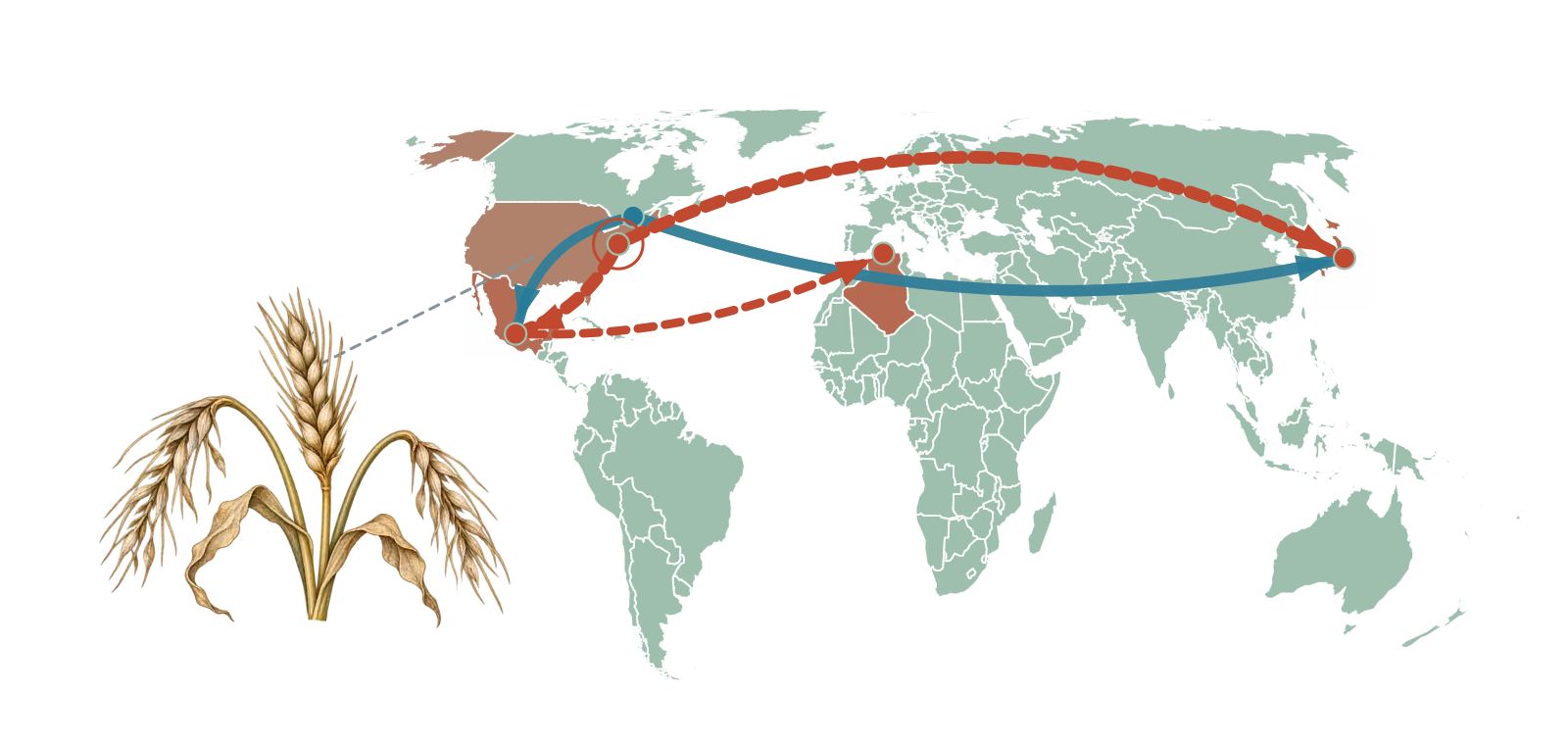
Network-based simulations also examine how shocks to domestic food production propagate through international trade. They show that exposure to external shocks and protection against domestic shortages differ across countries. The structure of trade therefore matters when assessing food-security risks.
The Food Connections resource page links to project materials, data and simulation tools on trade and food and nutrition security.